I Miss You, Papa
The Man Who Chose to Start Again
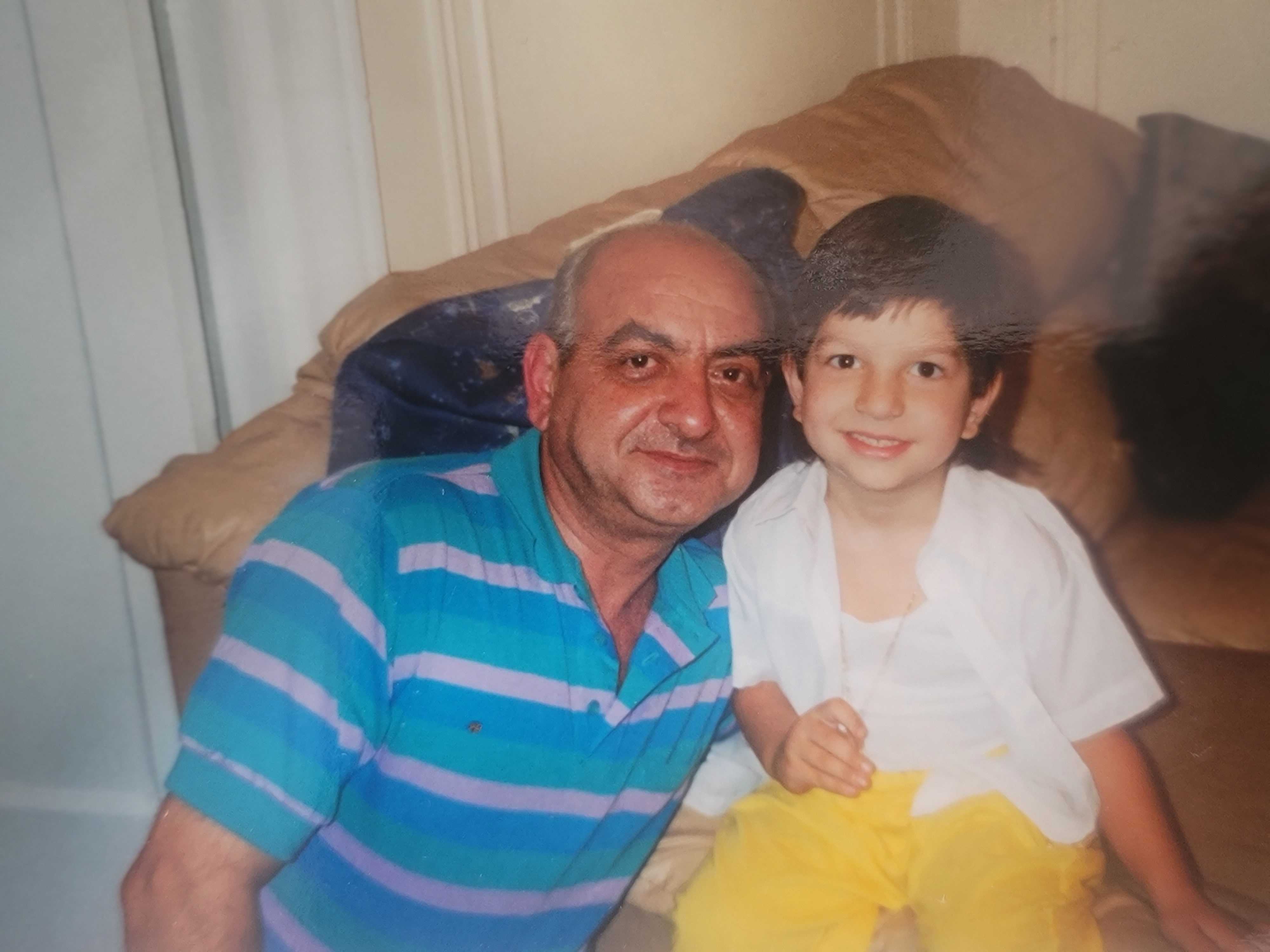
Five years ago, on September 30, 2021, my father passed away. This is his story.
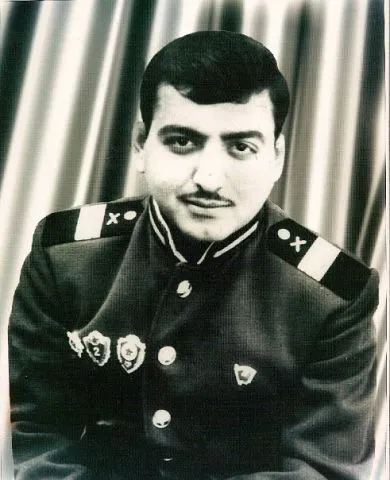
My father was Vladimir Samvelovich Tsaturov. An Armenian, born in Baku, Azerbaijan in 1949.
He came from a family that survived the Armenian Genocide and carried its losses. Then he lived through his own: a pain most people will never have to endure. He didn't just survive it. He made a choice to start again, at a point where most people would have called life hopeless.
Spitak, 1988
In February 1988, mobs in Sumgait, a city just north of Baku, hunted down Armenian families. Women and children were beaten, burned and murdered in their homes. My father had friends in Sumgait, and his own mother came from Karabakh, the region at the center of the conflict.
Later that year, on December 7, an earthquake tore through northern Armenia. The city of Spitak, where my father lived with his wife and three children, was nearly wiped off the map.
He was working in Yerevan that day, far from Spitak, and still felt the ground tremble under his feet. He rushed back. His youngest son, Davit, was 3. His eldest daughter, Milana, was 16. Both had been crushed beneath a collapsed building.
He lost two of his children that day. He searched the rubble for days for their bodies and never found them. His youngest daughter, Argina, was outside the city with her mother, and survived.
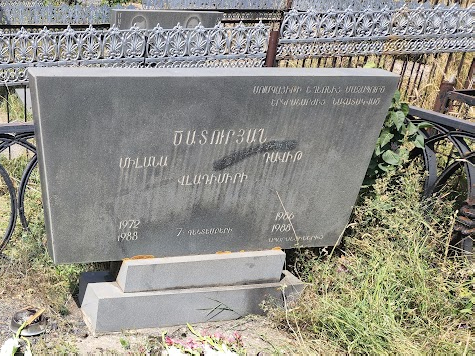
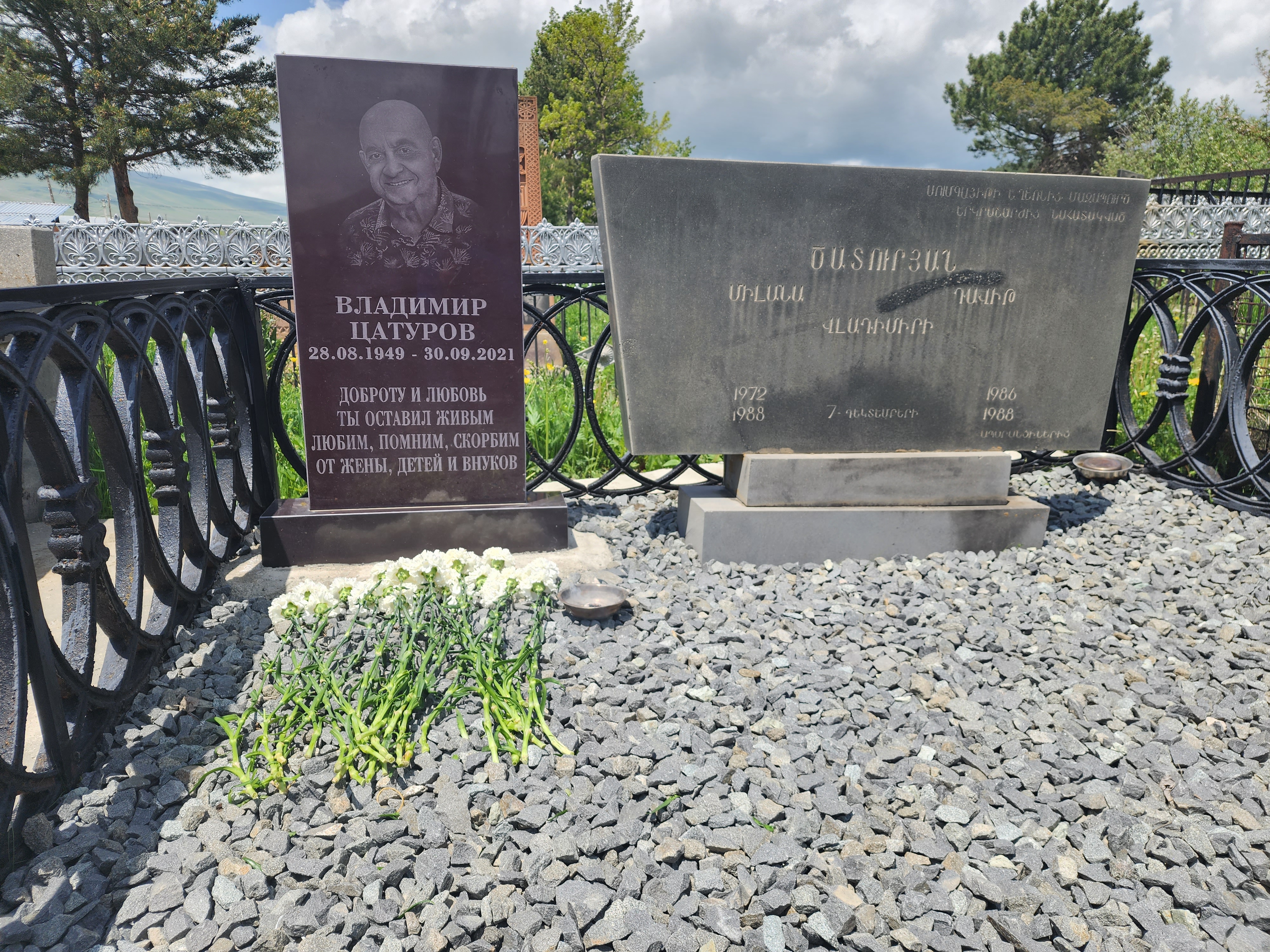
The people of Aparan, Armenia, raised the money among themselves and put up the headstone you see below.
That same day, my father learned that Davit, the 3-year-old son he had just lost, was never his biological son. His wife, Tamara, left him for a man she was having an affair with. He was alone, ashamed, homeless and completely isolated.
The heartbreak is hard to put into words. Unfathomable. Unspeakable.
Tiraspol, 1989
Several months later, on a bus, he met a woman who was visiting Yerevan for work. She was negotiating with a major textile factory on behalf of a large enterprise from Moldova.
They fell in love. As she packed to go home, she asked him to come with her, on one condition: she needed the blessing of her 16-year-old daughter and her elderly mother, who lived with her in Tiraspol.
He knew that if he said no, he might never see her again. And he had nothing left to lose. He said yes. That woman became my mother.
They married, became a blended family and lived through the collapse of the Soviet Union in the early 1990s. My father was still carrying enormous grief, but he was deeply grateful for the second chance God had given him. And he wanted a child of his own with the woman he had chosen for this new chapter of his life.
She was 39, with a teenage daughter and an elderly mother to care for. A baby was the last thing on her mind. He pleaded with her: “Please, let us have a son together.”
Eventually, she agreed. In the fall of 1992, I was born in Tiraspol, in a country torn apart by war after the fall of the Soviet Union.
Brooklyn, 1993
Things kept getting worse, and my parents made the decision to leave their home and come to the United States as refugees.
We landed in Brooklyn in 1993 with no money, no English and no contacts. My father, my mother, my grandmother, my sister and me. All we had was our faith, resilience, hope and a dream of a better life in America.
Our first bed was a mattress someone had thrown out on the street. My mother built a bed for me out of a few planks of wood.
My father took hard labor jobs. He worked in a factory 12 hours a day, 7 days a week, breaking his back for next to nothing, just so we could eat.
I have some good memories of him from those years. Taking me to the park. Walking me to school. Teaching me math. But our relationship was hard. I remember him always being depressed, drunk or angry. Once I asked him to play with me, and he lashed out because he wanted to watch the news and the World Cup.
I grew to resent him. For the drinking, for the anger and rage, and for the emotional connection that was never there.
When I was 13, my father had his first heart attack. After major surgery, he couldn't work for six months. We came close to being evicted. That's when I stepped into the role of provider for my family. I rode my bicycle around New York fixing people's computers and gave everything I earned to my parents so we could pay the bills.
He went back to work, and over the next few years he survived five more heart attacks. When I turned 17 and joined the military, he stopped working for good. His body couldn't take the hard labor anymore.
New Jersey, 2015
In 2015, my father was diagnosed with stage 4 colon cancer. The doctors told him his chances were slim. He was deteriorating fast, and he chose surgery as a last hope.
I took him to the hospital that day and brought every photo I could find: pictures of him as a child, and of the memories we'd made together over the years. As he went into the operating room, I had tears on my face. I knew he might not come out, and I might never see him again. I hugged him tight and told him I loved him. He told me he loved me too. We all tried to stay hopeful, but part of us felt this was goodbye.
Ten hours later, he was in the post-surgical ICU, intubated and on his way to recovery. I asked him once what got him through it. He said, “I kept thinking about how much I want to dance at your wedding.”
A few months after that surgery, at my wedding, my father walked onto the dance floor, threw his cane to the side and danced to Armenian songs like a boss.
That was the year my relationship with my father changed, for good. I found compassion for him. As I thought about his story and everything he had survived, I finally began to understand the pain, grief and sorrow he had been carrying all those years.
We became close. I'd pick him up in Brooklyn and bring him to our house in New Jersey for the weekend. He'd sit on the porch taking in the greenery and the fresh North Jersey air. He called it his “dacha,” his escape from his tiny Brooklyn apartment. He said he always felt more alive at our house.
He didn't talk much, and he rarely talked about his life. I think it was too painful. But I would watch him sitting there, thinking, reflecting, sitting with his emotions and his pain.
One day he told me, “I survived the earthquake, immigrating to America, the heart attacks. I beat cancer, and I danced at your wedding. Now all I want is to one day hold my grandchild in my arms.”
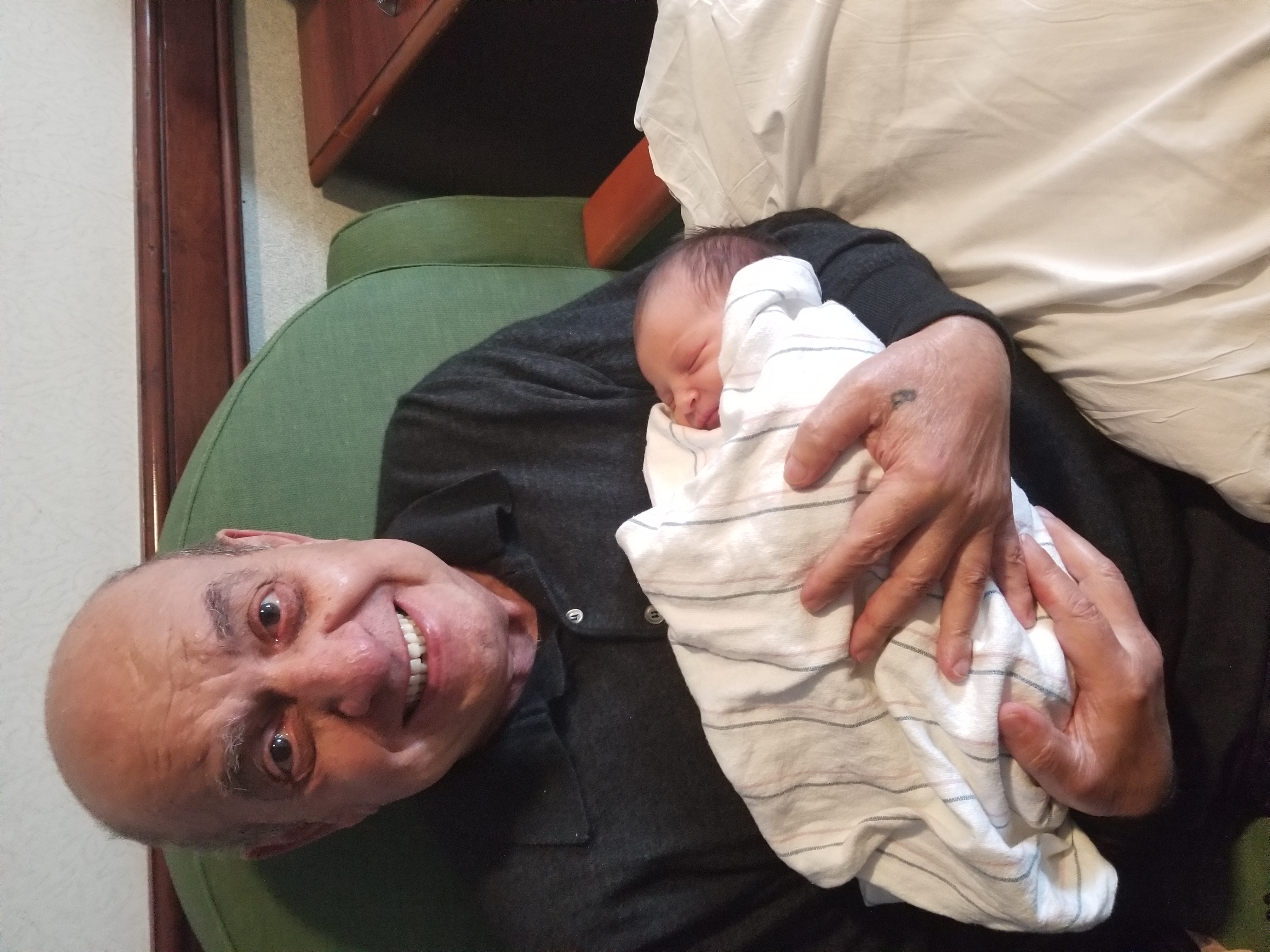
In October 2017, he did. My daughter Mia was born, and he held her in his arms, smiling, laughing and crying all at once. I'll never forget his eyes that day, or how much that moment meant to him.
After that, he came over nearly every weekend, sometimes with my mom, often on his own, just to play with his granddaughter and spend time with me.
Brooklyn, 2021
Then the pandemic hit. My father had COVID twice, with no symptoms either time, and carried the antibodies naturally. The man was strong beyond measure.
We had always talked about going to Armenia together: to see his brother's children, and Argina, his one surviving daughter, whom he had stayed in touch with. It had been his dream since the day we arrived in America. Either money didn't allow it, or life got in the way.
That year, my business did exceptionally well. I told him, “Papa, we're going to Armenia. I'm going to make it happen, and soon. I'll get us a private jet and a five-star hotel. We're going to have the trip of our lives.” I had never seen him so excited about anything.
Knowing his history, he did the responsible thing and went to his cardiologist and pulmonologist for clearance. The answer was unanimous: “If you get on that plane, you won't get off it alive.” His carotid arteries were severely blocked, and the cabin pressure could have killed him.
Disappointed and saddened, he told me, “Son, I can't go with you. It's not worth the risk. But I want to be on video with you when you go, so I can experience it with you. Just seeing you there with our family would make me happy.”
I canceled everything and told myself we'd do it another time.
In September 2021, Hurricane Ida destroyed our home in New Jersey. Six feet of floodwater filled our newly renovated house. My wife, Anna, was eight months pregnant with our second child.
My dad called to check on us. I told him what was happening, and he was so worried. He kept asking questions, and I didn't have time. I said, “You always call me at the wrong time. I can't talk right now.” And I hung up. It was the last time we ever spoke.
The weeks that followed were insurance, FEMA, contractors and temporary housing. Then my mother called. My father had been in the hospital with COVID for a week and had stopped answering her calls.
I dropped everything and went to Coney Island Hospital in Brooklyn. By the time I got there, he was on a ventilator. He couldn't speak. Only his eyes moved.
I couldn't understand it. He'd had COVID twice and never felt a thing. A few weeks earlier, he had gotten the vaccine. I have my own beliefs about what happened, and I'll leave it at that.
What I remember most is looking into his eyes in that isolated hospital room, and him waving his hands like he was flapping his wings, saying goodbye. The doctors and nurses told me there was nothing more they could do except keep him on the ventilator.
He passed away the next day, September 30, 2021.
That was it. No goodbyes. No last conversation.
Three weeks later, on October 21, my daughter Karina was born. He never got to meet her.
Aparan
I arranged a funeral for him in Brooklyn and invited everyone who knew him. Armenian musicians played the duduk, his favorite instrument. I played a slideshow of every photo and video of him I could find, and streamed the whole service live to a Facebook group so our relatives in Spain and Armenia could be there with us.
But the story didn't end there. My father's wish was to be buried in Aparan, right next to the children he lost in the earthquake.
After the funeral, I had him cremated, as he wanted, and carried the urn with me on my first-ever trip to Armenia. As the plane descended into Zvartnots Airport in Yerevan, I held his ashes and whispered, “Papa, we're finally here.”
I met my family in Armenia for the first time: my sister Argina, my cousins and their families. The very next day, we drove up into the mountains to Aparan, to the resting place of Davit and Milana, and buried my father's ashes beside them. We put up a small plaque with his photo and his name.
That trip changed my life. Seeing the old country where he lived. Meeting family I never knew. Fulfilling his last wish and laying him to rest where he always wanted to be.
A year later, to honor him, I had the site completely renovated and put up a tall memorial headstone with an inscription in Russian.
What he left me
My father lived a hard life, one that's impossible to imagine unless you lived it. But he was strong, resilient and generous, and he put his family first. Always.
For all the difficulty between us when I was growing up, I'm grateful for those last years, when we finally had the bond we both needed. Earlier in the year he died, he told me, “I'm so proud of you, son. I'm sorry I wasn't there for you enough. I love you.” Those are the words I hold on to, not the last ones I said to him.
Sometimes we learn more from people after they've finished their journey than we did while they were here with us. That has been true for me.
In the years after he died, my own life came apart. I lost my marriage, my home and Anna, the mother of my daughters. There were nights I needed my dad and his love more than anyone or anything.
So I thought about him. In a single day, he lost two of his children, his marriage and his home. He had every reason to close his heart for good. Instead, a few months later, he said yes to a woman he met on a bus. At an age when most people's lives are already set, he fell in love again, started a new family and built a whole new life. Then he crossed an ocean with nothing and started over one more time.
If he could rebuild after that, I could rebuild after this. His memory was enough to lean on, and it gave me the strength I needed.
That's what he left me: proof that you can lose everything and still choose to start again, and that a heart broken that badly can still love again. I believe it because he lived it. I know he's always with me.
A man of courage, resilience, kindness and strength.
I miss you, Papa.